%20FA-05.png)
Cold Shower vs Cold Plunge: Best Cold Therapy in Malaysia

Updated: Aug 3
Quick Answer: Cold Shower vs Cold Plunge — Which Is Better?
Cold water immersion is one of the most talked-about wellness practices in Malaysia right now. From cold plunges to cold showers, more people are exploring cold exposure to support recovery, energy, and mental clarity.
One question comes up constantly: is a cold shower the same as a cold plunge, and which one is actually better?
The cold shower vs cold plunge Malaysia question isn't just about preference — the honest answer depends on how each method affects the body, and how well it fits your lifestyle, experience level, and comfort with deliberate cold exposure.
What Is Cold Water Immersion?
Cold water immersion (CWI) refers to exposing the body to cold water for short periods to support recovery, circulation, and nervous system activation, though results vary with water temperature and duration.
This can happen through:
Cold plunge — full-body immersion
Cold shower — flowing cold water over part of the body, without full submersion
Both trigger similar physiological responses, but the intensity and overall experience are genuinely different.
What Is a Cold Plunge?
A cold plunge involves fully immersing your body in cold water, typically between 6°C and 12°C, for a short duration. Because the whole body is submerged at once rather than exposed gradually, the response tends to be stronger and more uniform than a shower produces.

When fully submerged, the body experiences:
A strong cold shock response as it reacts to sudden, full-body immersion
Hydrostatic pressure — water pressure that constricts blood vessels and pushes blood back toward the core
A more significant full-body temperature drop
Intense nervous system activation
Because of this intensity, cold plunges are often used for next-day muscle recovery after training, reducing perceived soreness, and building mental resilience through repeated exposure to a genuinely uncomfortable stimulus.
That said, full immersion can feel overwhelming for beginners. It can lower core body temperature quickly and may raise blood pressure initially, so people with underlying health conditions should be cautious and ease in gradually rather than starting with a full plunge.
What Is a Cold Shower?
A cold shower is a more accessible form of cold water therapy — flowing cold water over part of the body, usually for a shorter duration than a plunge.

Unlike a plunge, a cold shower means:
The body isn't fully submerged
There's no hydrostatic pressure
Exposure is easy to control — you can adjust how much of your body is exposed and for how long
You can ease in gradually rather than committing to full immersion all at once
This makes cold showers a genuinely practical daily habit — no ice bath setup required, just a few minutes of intentional exposure. They still stimulate skin temperature receptors, circulation, and nervous system activation, along with the same brown fat activity linked to thermoregulation and metabolism that full plunges trigger, just at a gentler intensity.
For most people, this makes cold showers the more accessible, beginner-friendly entry point into cold therapy.
Cold Shower vs Cold Plunge Malaysia: Key Differences at a Glance
Feature | Cold Shower | Cold Plunge |
Exposure Type | Partial exposure under flowing water | Full-body immersion |
Intensity | Moderate | High |
Control | Easy to adjust | Fixed once immersed |
Duration | ~30 seconds to 3 minutes | ~30 seconds (beginners) up to 5–10 minutes (experienced) |
Daily Use | Generally safe for daily use | Not recommended daily — 2 to 4 sessions per week is the commonly cited range |
Hydrostatic Pressure | No | Yes |
Beginner-Friendly | Very | Moderate to challenging |
Use Case | Daily reset, quick energy boost | Recovery-focused, higher intensity |
Cold plunge frequency guidance draws heavily from Dr. Susanna Søberg's research (the "Søberg Principle"), which points to roughly 11 minutes of total weekly cold exposure, split across 2–4 sessions, as sufficient for meaningful metabolic and recovery benefits — going beyond that doesn't appear to add proportional benefit, and the body needs recovery time between intense full-immersion sessions the same way it needs recovery between hard workouts. A cold shower's much gentler intensity is why it doesn't carry the same daily-use caution.
Which Is Better for Malaysia’s Climate?
Malaysia's hot, humid climate genuinely changes how the body responds to cold exposure.
Most people here are already heat-adapted, which means cold exposure can feel more intense right away, and the jump between hot ambient conditions and cold water is a bigger swing than it would be in a cooler climate. Recovery needs to feel accessible here, not extreme.
Because of this, cold showers are often the better starting point in Malaysia, with cold plunges introduced progressively for people who want to build up to them. Rather than copying Nordic or Western cold exposure protocols directly, a climate-adapted approach — starting gentler, building gradually — tends to work better for most people living here.
Cold Shower vs Cold Plunge: Which Fits You Best?
Cold showers tend to suit you if you:
Are new to cold exposure
Want a quick energy boost without a big time commitment
Prefer a more controllable, less intense experience
Want something you can realistically build into a daily habit
Cold plunges tend to suit you if you:
Already have some experience with cold exposure
Want deeper post-training recovery after intense workouts
Are comfortable with a stronger cold shock response
Want the more immersive, whole-body challenge
There's no universally "better" option — only what fits your body, experience level, and routine.
The Revibe Perspective: A Progressive Approach
At Revibe, cold exposure isn't treated as an extreme challenge — it's a progressive wellness tool for physical recovery, mental resilience, and better sleep.

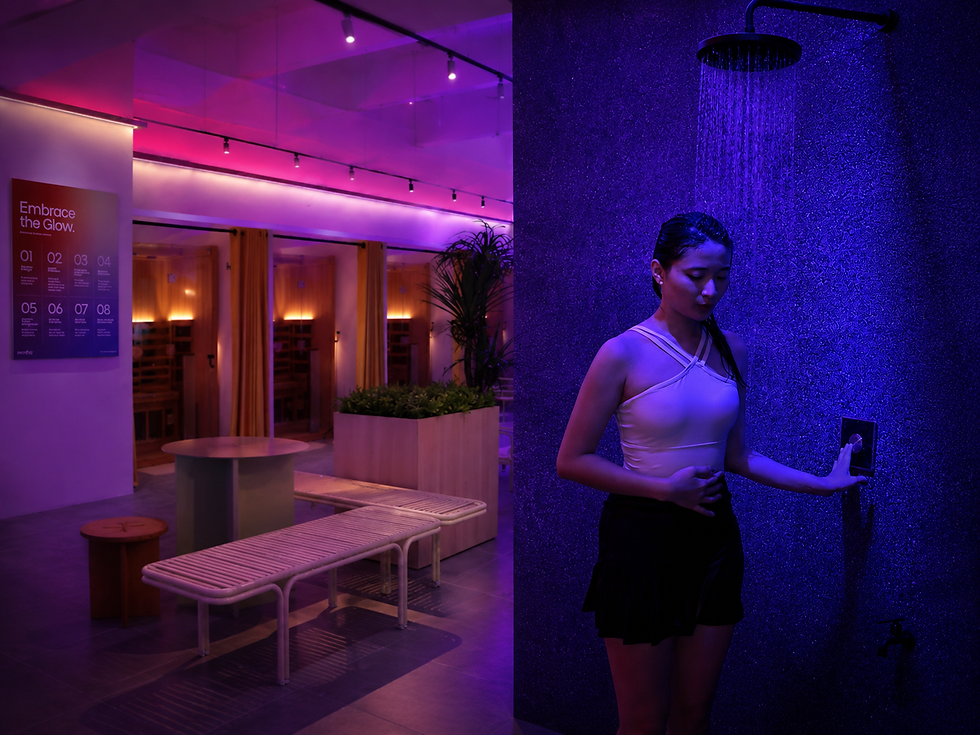
Instead of forcing intensity, the focus is on safety and comfort, gradual adaptation, and consistency over time. Sejuk Six™, our 6°C cold shower inspired by Nordic waterfalls, is designed to make cold exposure accessible, controlled, and repeatable — especially for first-timers, without requiring the setup or intensity of a full plunge tub.
Cold Exposure as Part of a Balanced Routine
Cold therapy is often paired with heat therapy, such as infrared sauna sessions, as part of a broader recovery routine. This combination supports circulation, muscle relaxation, and a more balanced nervous system response. Used consistently, this kind of sequence may also contribute to reduced stress over time.
Revibe — Sejuk Six™ and the Power of Two
Revibe is built around a specific philosophy: cold therapy should be accessible, progressive, and sustainable — not extreme for the sake of extremity.
Sejuk Six™ is Malaysia's first and only 6°C cold shower and Revibe's current cold experience — a shower, not a plunge tub, inspired by the cold waterfall showers found in Nordic wellness culture. At 6°C, it sits well within a genuine therapeutic range, delivering real cold shock response and nervous system activation without requiring full submersion.
Sejuk Six™ is also designed with hygiene in mind: it runs on continuously flowing water rather than a shared, standing tub that multiple guests sit in. That means no reused or recirculated bathing water between sessions — each guest experiences fresh, flowing water throughout, which is a meaningful practical advantage over a traditional shared plunge pool.
The key advantage over a standard cold shower is the temperature itself. At 6°C versus roughly 28°C from a typical Malaysian tap, these are fundamentally different experiences physiologically — the vasoconstriction, nervous system activation, and cold shock response described throughout this guide are genuinely present at 6°C in a way ordinary tap water simply can't produce.
The Power of Two is Revibe's pairing of infrared sauna and Sejuk Six™ in a single session. Infrared sauna heats the body at the tissue level first, producing deep muscle relaxation. Sejuk Six™ follows, delivering the cold reversal — one heat phase, one cold phase, recovery. It's simpler than traditional multi-round contrast therapy, which makes it easier to do correctly and more likely to become a habit you actually keep. Learn more in our guide to why sauna and cold recovery work together.
The focus throughout is safety, comfort, and guided progression rather than intensity for its own sake — something repeatable, not a one-time challenge to survive.
Final Thoughts
Cold showers and cold plunges both offer real recovery and energy benefits. The meaningful difference is intensity, water coverage, and how immersive the experience is — not one being fundamentally superior to the other.
For most people in Malaysia, starting with a cold shower and progressing gradually is the most sustainable approach. Cold exposure doesn't need to be extreme to be effective — regular, consistent exposure matters more than chasing colder temperatures or longer sessions.
FAQ
1. Is a cold shower the same as a cold plunge?
No. A cold shower involves flowing cold water over part of the body, while a cold plunge involves full-body immersion, which creates a stronger, more uniform cold shock response along with hydrostatic pressure that a shower doesn't produce.
2. Which is better: cold shower or cold plunge?
Neither is universally better. Cold showers are more beginner-friendly and easier to build into a daily routine, while cold plunges offer a more intense experience that may support deeper post-training recovery. The right choice depends on your experience level and goals.
3. Does Revibe offer cold plunge?
Not currently. Revibe's cold exposure offering is Sejuk Six™, our 6°C cold shower. This guide compares cold showers and cold plunges generally to help you understand cold therapy as a whole, not as a menu of options currently available at Revibe.
4. Can cold showers provide similar benefits to cold plunges?
Cold showers offer many of the same benefits — improved circulation, increased alertness, reduced perceived muscle soreness — though cold plunges may produce a stronger effect since full-body submersion creates a more uniform physiological response.
5. How long should I stay in cold water?
Most people start with 30 seconds to 3 minutes for cold showers. Cold plunges typically start even lower — around 30 seconds for beginners — building up to 5–10 minutes for those with more experience. Duration should increase gradually based on comfort and experience — longer exposure isn't necessary for real benefits, especially when starting out.
6. Is cold exposure safe in Malaysia's hot climate?
Yes, when introduced gradually. Cold exposure can genuinely benefit people in hot climates, but since the body is already heat-adapted, the swing between hot ambient conditions and cold water can feel more intense — easing in gradually rather than starting with the coldest, longest option is the safer approach.
Written by Stanley Ho, Head of Experience & Talents.

