%20FA-05.png)
Why Cold Showers May Be the Smartest Nervous System Reset in Modern Malaysia

Updated: Aug 3
Quick Answer: How Does a Cold Shower Reset Your Nervous System?
Cold water triggers an immediate response through the brainstem and vagal pathways — breathing deepens, mental chatter quiets, and attention shifts from rumination back into the body within seconds. Regular cold shower exposure trains the nervous system to adapt to stress rather than just react to it.
Modern life keeps us in our heads.
Screens. Notifications. Deadlines. Noise.
Most people today are mentally overstimulated while physically under-aware. Over time, this imbalance shows up as fatigue, irritability, poor recovery, shallow breathing, and a constant sense of low-grade tension.
What many people don't need is more stimulation.
They need regulation.
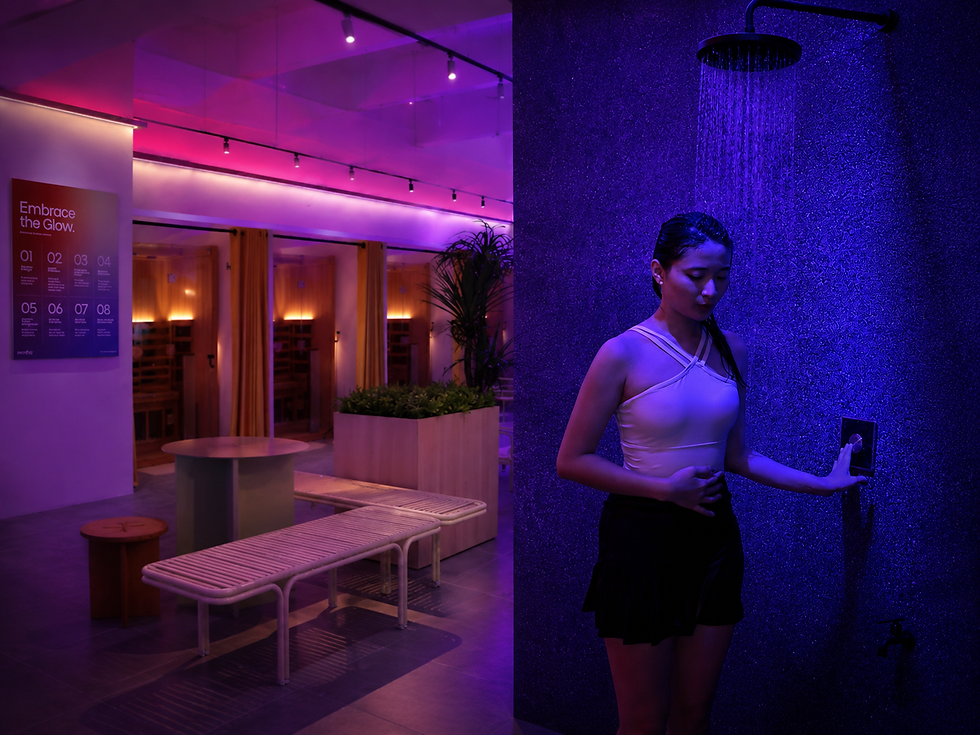
This is where cold shower therapy offers something powerful — an immediate return to the body. What a cold shower nervous system reset actually does is interrupt that hover-state before it becomes your default. At Revibe, we believe cold exposure should be intentional, accessible, and intelligently applied. That's why we introduced Sejuk Six, Malaysia's first 6°C cold shower, as a dynamic alternative to extreme cold plunge.
What Happens When Cold Water Hits the Skin
When cold water makes contact with the skin, cold receptors send rapid signals to the brainstem. The response is immediate.

Within seconds:
Breathing deepens
Awareness sharpens
Posture adjusts
Muscle tension reorganises
Mental chatter reduces
This is not motivational psychology. It is neurology.
Cold exposure stimulates the somatosensory system and vagal pathways, pulling attention away from rumination and back into embodied awareness. In simple terms, cold showers force presence. You cannot scroll mentally while standing under 6°C water.
Your body takes priority.
Why Nervous System Reset Matters More Than Ever
Chronic stress and digital overload keep many people in a state of low-level sympathetic activation. They are not fully relaxed, but they are not fully engaged either. They hover in between.
Cold showers interrupt this pattern.
A structured cold shower session provides:
A clear sensory boundary
Immediate breath awareness
A shift in blood flow and circulation
A recalibration of muscular tension
A reset of mental focus
Over time, regular cold exposure can improve stress tolerance and recovery capacity by training the nervous system to adapt rather than react. At Revibe, we view cold exposure as nervous system training, not endurance theatre.
Cold Shower vs Cold Plunge: Which Is Better?
Cold plunge therapy has gained popularity in Malaysia. Full immersion offers strong physiological stimulus and can be highly effective when guided properly. However, cold plunge can feel intimidating for beginners and may not suit daily repetition for everyone.
Cold shower therapy offers a more accessible alternative.
At Revibe Petaling Jaya, Sejuk Six provides:
Controlled 6°C exposure
Flowing fresh water each session
Adjustable entry and exit
Lower psychological barrier
Dynamic movement instead of static immersion
Unlike shared-water environments, Sejuk Six operates as a cold shower system with continuous flow, maintaining water freshness and hygiene standards.
The goal is not to prove how long you can endure cold.
The goal is to build intelligent resilience.
Quality Over Extremes
Cold exposure is powerful. But like any stressor, dosage matters.
At Revibe, we do not chase shock for the sake of intensity. We encourage guests to:
Regulate breathing
Observe posture
Enter progressively
Exit with control
Optional coaching is available for those new to cold exposure, but the Sejuk Six system is designed to feel intuitive and approachable. Because sustainable recovery should fit into real life.
The Real Question
In 2026, the conversation around wellness must evolve.
It is not about how extreme your recovery protocol looks.
It is about how effectively it supports your energy.
Cold showers, when applied with intention, offer one of the simplest and most accessible tools for:
Nervous system regulation
Stress reset
Circulation support
Mental clarity
Recovery enhancement
So the question is not:
How cold can you go?
The better question is:
Does your recovery method help you return to yourself?
At Revibe, we believe quality always wins.
FAQ
1. How does a cold shower reset your nervous system?
Cold water triggers cold receptors that send rapid signals to the brainstem, prompting deeper breathing, sharper awareness, and reduced mental chatter within seconds. This stimulates vagal pathways and shifts attention from rumination back into the body.
2. Is a cold shower as effective as a cold plunge for nervous system regulation?
Both engage similar physiological pathways. Full immersion offers a stronger stimulus but can feel intimidating for beginners, while a controlled cold shower like Sejuk Six offers a more accessible, repeatable option for daily nervous system training.
3. How long should a cold shower be for a nervous system reset?
There's no single required duration — what matters more is regulated breathing, progressive entry, and controlled exit rather than enduring extreme cold for as long as possible.
4. Can cold showers help with chronic stress?
Regular cold exposure is associated with improved stress tolerance over time, as it trains the nervous system to adapt to a controlled stressor rather than simply reacting to it.
5. What makes Sejuk Six different from a typical cold shower at home?
Sejuk Six delivers a controlled 6°C exposure with continuously flowing fresh water, adjustable entry and exit, and is designed to feel more intuitive and approachable than a static cold plunge — while still using the same nervous system pathways.
Continue Your Wellness Journey
If you'd like to learn more, explore these related guides:
Written by Stanley Ho, Head of Experience & Talents.