%20FA-05.png)
Cold Shower vs Cold Plunge Malaysia Guide
- Stanley Ho

- Apr 17
- 7 min read
Updated: 7 days ago
Understanding the Difference and Choosing What Works for You
Cold water immersion is becoming one of the most talked-about wellness practices in Malaysia. From cold plunges to cold showers, more people are exploring cold exposure to improve recovery, energy, and mental clarity. For many people, a cold shower can offer a quick energy boost while also supporting overall well-being and mental health.
But one common question remains: Is a cold shower the same as a cold plunge, and which one is better if you want the benefits of cold water?
The answer depends on how each method affects the body—and how well it fits your lifestyle, experience level, and comfort with deliberate cold exposure.
What Is Cold Water Immersion?
Cold water immersion (CWI) refers to exposing the body to cold water for short periods through cold immersion to support recovery, circulation, and nervous system activation, although results vary with water temperature.
This can be experienced through:
Cold plunge (full-body immersion)
Cold shower (flowing cold water and partial exposure rather than full immersion)
Cold showers expose only parts of the body, while plunges create whole body or entire body exposure with broader water coverage.
Both methods activate similar physiological responses, but the intensity and experience are very different.
What Is a Cold Plunge?
A cold plunge involves immersing your body in cold water, typically between 6°C and 12°C, for a short duration. Colder temperatures and ice cold water generally make the experience more intense, and unlike showers that hit only parts of the body, full submersion creates a more uniform response.

When fully submerged, the body experiences:
Strong cold shock response as the body reacts quickly to immersion
Hydrostatic pressure (water pressure on the body), with blood vessels constricting and pushing blood back toward the core to support blood flow
Full-body temperature drop
Intense nervous system activation
Because of this, cold plunges are often used for:
Next day muscle recovery after workouts
Reducing perceived soreness
Building resilience and mental focus
Post workout recovery and workout recovery after intense workouts, with greater recovery benefits from full-body immersion
However, the experience can feel intense, especially for beginners. Full immersion can lower core body temperature and may increase blood pressure responses at first, so people with health concerns should use caution. It may also offer potential health benefits such as activating brown fat and cold shock proteins.
What Is a Cold Shower?
Taking a cold shower is a simple form of cold water therapy that exposes the body to flowing cold water, usually for a shorter duration.

Unlike a plunge:
The body is not fully submerged
There is no hydrostatic pressure
Exposure can be controlled easily
Enter or exit the cold exposure more gradually without needing to step fully into a cold tub
Making cold showers part of a routine is practical because regular cold showers provide regular exposure without the setup required for ice baths or a cold bath.
Cold showers still stimulate:
Skin temperature receptors
Circulation changes
Nervous system activation
Brown fat activity, which supports thermoregulation and metabolism
Cold shock proteins linked to recovery and muscle repair
Brown Adipose Tissue (BAT), which helps burn glucose and lipids for heat and may improve insulin sensitivity
This makes them a more accessible and beginner-friendly way to experience cold therapy, with health benefits like a quick energy boost and simple daily support for overall health.
Key Differences: Cold Shower vs Cold Plunge
Feature | Cold Shower | Cold Plunge |
Exposure Type | Partial exposure under flowing water; both cold showers are less intense | Full-body immersion for deeper cold exposure |
Intensity | Moderate | High |
Control | Easy to adjust | Fixed once immersed |
Duration | Around 30 seconds to 3 minutes | Around 1 to 3 minutes |
Hydrostatic Pressure | No | Yes |
Beginner-Friendly | Very | Moderate to challenging |
Use Case | Daily reset, quick energy boost | Recovery-focused use with stronger therapeutic benefits |
Which Is Better for Malaysia’s Climate?
Malaysia’s hot and humid climate plays an important role in how the body responds to cold exposure.
Most people are already heat-adapted, which means:
Cold exposure feels more intense initially
Repeated hot-cold cycles may be overwhelming
Recovery needs to feel accessible, not extreme
In a hot climate, cold water triggers can feel stronger because the body is shifting between more extreme temperatures.
Because of this:
Cold showers are often a better starting point
Cold plunges can be introduced progressively
Rather than copying Western or Nordic protocols directly, it is more effective to adopt a climate-adapted approach that helps people access the benefits of cold without overdoing exposure to extreme temperatures in daily life in Malaysia.
Cold Shower vs Cold Plunge: Which Should You Choose?
Choose Cold Shower if you:
Are new to cold exposure
Want a quick energy boost
Prefer a less intense experience
Want to build a daily habit, since regular exposure can improve focus, contribute to reduced stress, and support mental well-being through shifts in norepinephrine, dopamine and endorphins
Have limited time
Want a practical routine that can build mental resilience over time by training the body to handle stress responses
Choose Cold Plunge if you:
Are more experienced with cold exposure
Want deeper recovery after intense training, especially after hard workouts where comparing showers and ice baths makes recovery goals more specific
Are comfortable with strong cold shock
Want a more immersive mental challenge through whole-body cold immersion, which can support deeper relaxation
May appeal more to fitness enthusiasts seeking stronger recovery-focused cold exposure
There is no “better” option—only what fits your body and routine.
The Revibe Perspective: A Progressive Approach
At Revibe, cold exposure is not treated as an extreme challenge, but as a progressive wellness tool for physical recovery, mental resilience, and better sleep quality.

Instead of forcing intensity, the focus is on:
Safety and comfort
Gradual adaptation
Consistency over time
Support for overall mental health and well-being
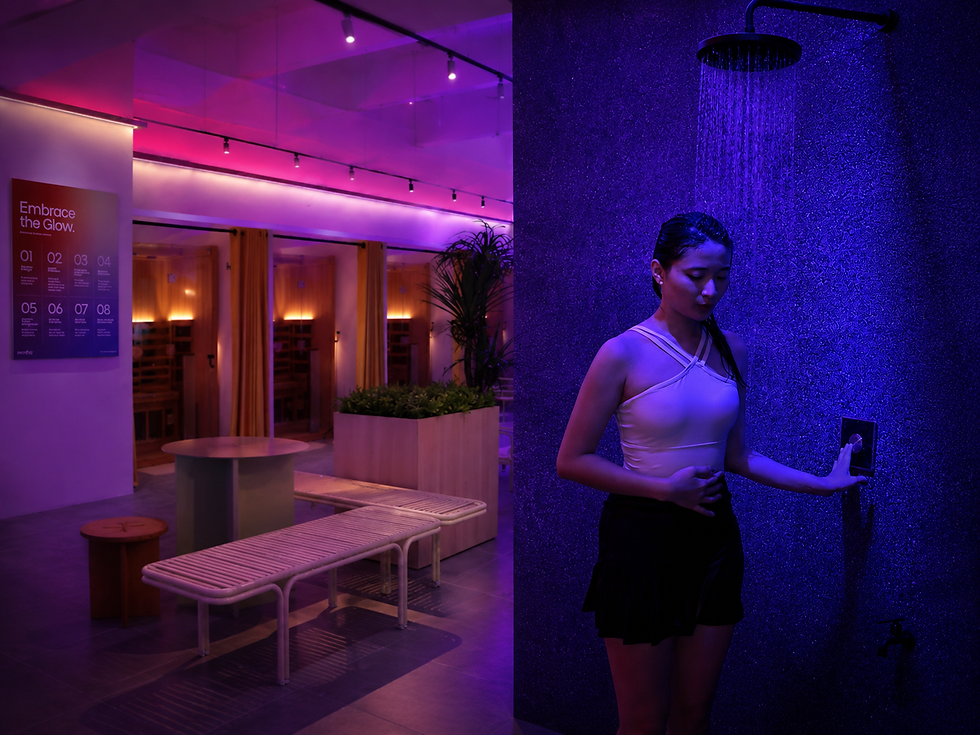
Experiences such as SejukSix™, a 6°C cold shower inspired by Nordic waterfalls, are designed to make cold exposure more accessible, controlled, and repeatable—especially for first-timers. This progressive approach is intended to help users reach optimal benefits safely over time.
This aligns with Revibe’s philosophy of making wellness simple, effective, and easy to integrate into daily life.
Cold Exposure as Part of a Balanced Routine
Cold therapy is often paired with heat therapy, such as infrared sauna sessions, as part of a broader cold water therapy routine.
This combination supports:
Circulation and blood flow
Muscle relaxation
Nervous system balance
Support for the immune system
Used consistently, this sequence may also contribute to reduced stress and overall health.
Revibe — SejukSix™ and the Power of Two
Revibe is designed around a specific philosophy: cold therapy should be accessible, progressive, and sustainable — not extreme for the sake of extremity.
SejukSix™: A Controlled 6°C Cold Shower Experience
SejukSix™ is Revibe's signature cold experience. It is a 6°C shower — not a plunge tub — inspired by the cold waterfall showers found in Nordic wellness culture. At 6°C, it sits well within the clinical therapeutic range, delivering a genuine cold shock response, norepinephrine activation, and meaningful cold stimulus without requiring full submersion.
This makes it particularly well suited to:
First-timers
Those who find full immersion psychologically daunting
Anyone who wants a repeatable, controlled cold exposure they can build on progressively
The key advantage of SejukSix™ over a standard cold shower is the temperature.
At 6°C versus 28°C from a Malaysian tap, these are fundamentally different experiences in physiological terms. The mechanisms described throughout this guide — vasoconstriction, norepinephrine spike, and cold shock activation — are genuinely present at 6°C in a way that Malaysian tap water cannot produce.
The Power of Two: Infrared Sauna + SejukSix™
The Power of Two is Revibe's pairing of infrared sauna and SejukSix™ cold exposure in a single session.
Infrared sauna heats the body at the tissue level, producing deep muscle relaxation and the vasodilation phase of contrast therapy.
SejukSix™ follows, delivering the cold reversal.
The session is simpler than traditional multi-round contrast therapy:
One heat phase
One cold phase
Recovery
This makes it easier to execute correctly and more likely to become a consistent practice.
Many people combine cold exposure with sauna sessions as part of a complete recovery routine. Learn more in our guide to Why Sauna and Cold Recovery Work Together.
The focus at Revibe is on safety, comfort, and guided progression rather than intensity for its own sake.
Sessions are designed to be repeatable — the kind of practice you can build a habit around, not a one-time challenge you survive.
Final Thoughts
Cold showers and cold plunges both offer health benefits and therapeutic benefits for recovery, energy, and mental well being. The significant difference lies in intensity, water coverage, and recovery focus between the two methods.
For most people in Malaysia, starting with a cold shower and progressing gradually is the most sustainable approach.
Cold exposure does not need to be extreme to be effective, and cold water immersion can also activate the vagus nerve to support relaxation, reduced stress, and improved mood. For most people, regular exposure matters more than chasing colder temperatures over time.
FAQ
1. Is a cold shower the same as a cold plunge?
No. A cold shower involves flowing cold water with partial exposure, while a cold plunge involves full-body immersion that cools the entire body more uniformly. Cold plunges are generally more intense because greater water coverage creates a stronger cold shock response, along with hydrostatic pressure.
2. Which is better: cold shower or cold plunge?
Neither is universally better. Cold showers are more beginner-friendly and easier to incorporate into daily routines, while cold plunges provide a more intense experience that may support deeper recovery. The best option depends on whether you want accessible daily use or stronger recovery benefits from cold immersion, and both cold showers and ice baths can fit different goals if used deliberately.
3. Can cold showers provide the same benefits as cold plunges?
Cold showers can provide many similar benefits, such as improved circulation, increased alertness, and reduced perceived muscle soreness. However, cold plunges may deliver stronger effects because whole body exposure creates a more uniform physiological response than a cold shower, which is especially relevant for workout recovery after intense workouts.
4. How long should I stay in cold water?
Most people start with 30 seconds to 3 minutes for cold showers and 1 to 3 minutes for cold plunges. Duration should increase gradually based on comfort, experience and water temperature, since both affect safety and effectiveness. Extended time in icy water or ice water is not necessary for optimal benefits, especially for beginners.
5. Is cold exposure safe in Malaysia’s hot climate?
Yes, when done properly. Cold exposure can be beneficial in hot climates, but people with health concerns should be cautious because cold water can affect blood pressure and body temperature responses, so it should be introduced gradually to allow the body to adapt safely, especially when moving from intense outdoor heat into cold exposure.
Written by Stanley Ho, Head of Experience & Talents.


Comments